


Counting
a photo of three handbags



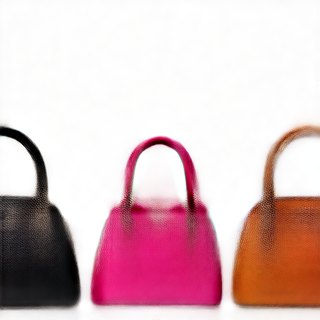




Step-8 previews and their Keystone scores; four kept
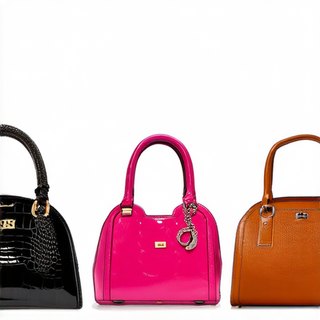 Keystone’s pruning ends on
Correct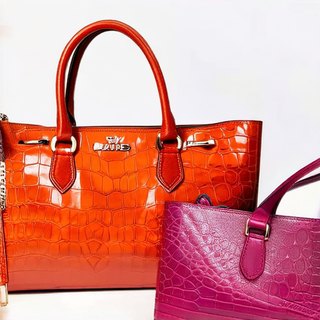 ImageReward’s pruning ends on
WrongAt a glance
Test-time search for text-to-image models finishes every candidate before it judges it. Keystone judges candidates at the beginning, from the model’s own blurry previews, and spends compute only where the outcome is still open.
Change the noise of one of the first two steps and the verdict changes most often; by step 8 of 40 it can already be read.
Finding 02Asked the prompt’s own questions, an off-the-shelf decision model reads counts and positions from a step-8 preview better than reward models read them from the finished image.
Finding 03Keystone’s searches beat best-of-8 with every other verifier while finishing far fewer images.
Finding 04It lifts best-of-N, progressive seed pruning and FK steering, and the gain holds without retuning, on average, across four base models and three benchmarks.
The problem
Text-to-image models still miscount, drop and misplace objects. The standard remedy, best-of-N, draws several complete images and keeps the one a verifier prefers. The verifiers are reward models trained on finished images, so the generator pays in full for every candidate the search will throw away.
Best-of-8 on “a photo of four bananas”every candidate runs all 40 steps before any is judged
Reward models reading the step-8 previewcandidate pairs ordered correctly
The image was never the problem. The judge was.
The idea
Every denoising step yields the model’s own estimate of the finished image. Decoded, it is a blurry preview, but how many objects there are, which ones and where is already visible.
Two candidates for “a photo of four bananas”the Keystone score of each preview above it
Keystone changes the judge instead of training one.
How it works
Three parts, and none of them is trained.
1Compile
The prompt becomes typed questions: presence and count, colour, position.
2Read
At a key step the decision model answers every question from the preview; the score is the smallest answer.
3Search
Adaptive search reads one candidate at step 16 and finishes it at 0.85 or above, else draws five more and finishes the best. Pruning keeps four of eight at step 8 and two at step 16, then compares the two finished images.
The previews’ answers decide which candidates receive further compute; nothing is differentiated through the judge and the sampler is unchanged.
The evidence Finding 01
Change only the noise of one step and see how often the official verdict changes; then ask how well each judge orders candidates from the preview at each step.
Change the noise of one stephow often the official verdict changes
Order candidates from the previewcandidate pairs ordered correctly, by the step that is read
Search should branch at the start and read shortly after.
The evidence Finding 02
On identical candidates, the Keystone score reads counts and positions from step-8 previews better than reward models read them from finished images.
Countingcandidate pairs ordered correctly
Positioncandidate pairs ordered correctly
SD3.5-Medium, development prompts (the paper’s Table 1). The Keystone score reads the step-8 preview; the other judges read the finished image.
Counting
a photo of three handbags
Step-8 previews and their Keystone scores; four kept
Keystone’s pruning ends onCorrectImageReward’s pruning ends onWrongPosition
a photo of a laptop left of a cow







Step-8 previews and their Keystone scores; four kept
 Keystone’s pruning ends on
Correct ImageReward’s pruning ends on
WrongColour attribution
a photo of a black broccoli and a yellow cake

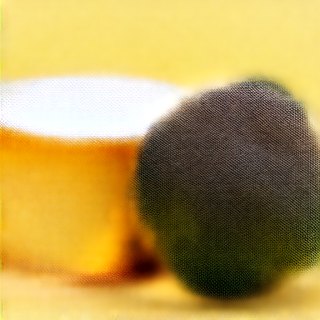
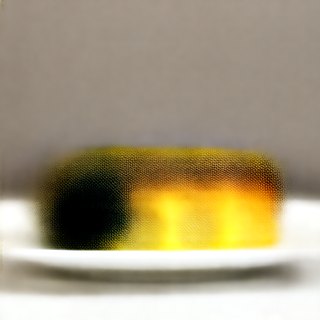
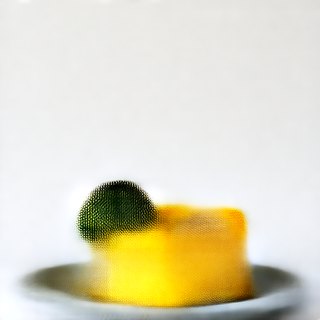

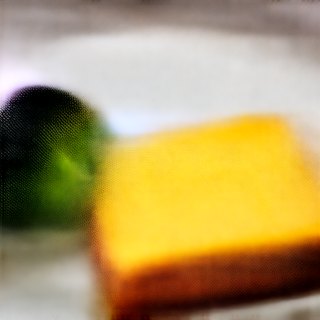

Step-8 previews and their Keystone scores; four kept
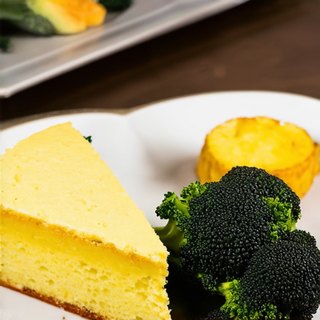 Keystone’s pruning ends on
Correct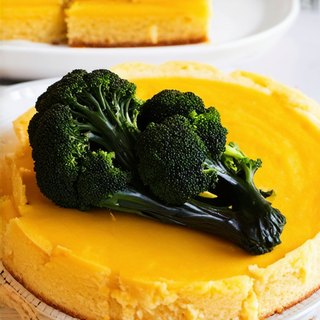 ImageReward’s pruning ends on
WrongExamples: official test prompts, chosen by the paper’s fixed rule (App. D.16.2).
Reading the preview well is what lets search stop early.
The evidence Finding 03
On GenEval with SD3.5-Medium, both searches lie above best-of-N with every judge at the same cost.
GenEval overall against computenetwork evaluations per image, log scale
Counting and positionGenEval, one sample against Keystone pruning
Pruning reaches 0.82 at 144 network evaluations; every other verifier’s best-of-8 costs 320 and stays at or below 0.78.
The evidence Finding 04
Swap the judge inside existing methods, or move to other models and benchmarks without retuning.
Better than every other verifier at every N from 2 to 8.
+0.071
with the Keystone score in place of ImageReward
0.709 → 0.754+0.045
with the Keystone score in place of ImageReward











BenchmarksGenEvalT2I-CompBenchGenAI-Bench
Drop-in: GenEval overall on SD3.5-Medium, same candidates, only the judge changes. Other models: a language model writes each prompt’s slots once; each benchmark’s own metric scores the images.
Averaged over models, both searches beat the strongest other verifier’s best-of-N on all three benchmarks.
Why it matters
Adaptive search draws a second batch for 42% of images; the rest finish after one candidate.
A released judge reads the sampler’s own previews, so any diffusion or flow sampler with a clean-image estimate can be searched at its key steps.
The same judgment of previews could supply the per-step signal that reinforcement learning of flow models still lacks.
The film
3 min 57 s, with narration. The voice is synthesized.
Cite
@article{fan2026keystone,
  title   = {Keystone: Judging Previews at Key Steps for Test-Time Search in Diffusion Models},
  author  = {Fan, Jiajun and Cheng, Chaoran and Wang, Ziwen and Yang, Changyi and Yang, Bangji and Zheng, Qinglong and Liu, Ge},
  journal = {arXiv preprint arXiv:2611.25530},
  year    = {2026}
}